Rack and board strategy
Compare several rack words before placing the first tile. A short play can be stronger when it reaches a premium square, opens a productive lane, or preserves a balanced mix of vowels and consonants. Before submitting, inspect every new perpendicular word because one invalid cross-word rejects the complete move. Before placing, test every rack candidate against the actual open lanes. Compare its base letter value, newly covered premiums, cross-words, and the leave that remains on the rack. A legal word can still be a weak move when it opens a triple-word lane for the next player.
Choosing an AI level
Every computer level generates legal moves from the same visible Wordmap word bank. Easy deliberately chooses from lower-scoring legal moves, Medium uses the middle range, Hard usually chooses among the top three, and Expert takes the highest-scoring move found. The labels describe selection policy, not human intelligence. Difficulty should be evaluated by observable move selection across several turns, not one lucky score. Easy samples the lower scoring legal range, Medium samples the middle, Hard chooses among the leading candidates, and Expert takes the highest scoring move found. Response delay changes pacing only.
Solo and two-player review
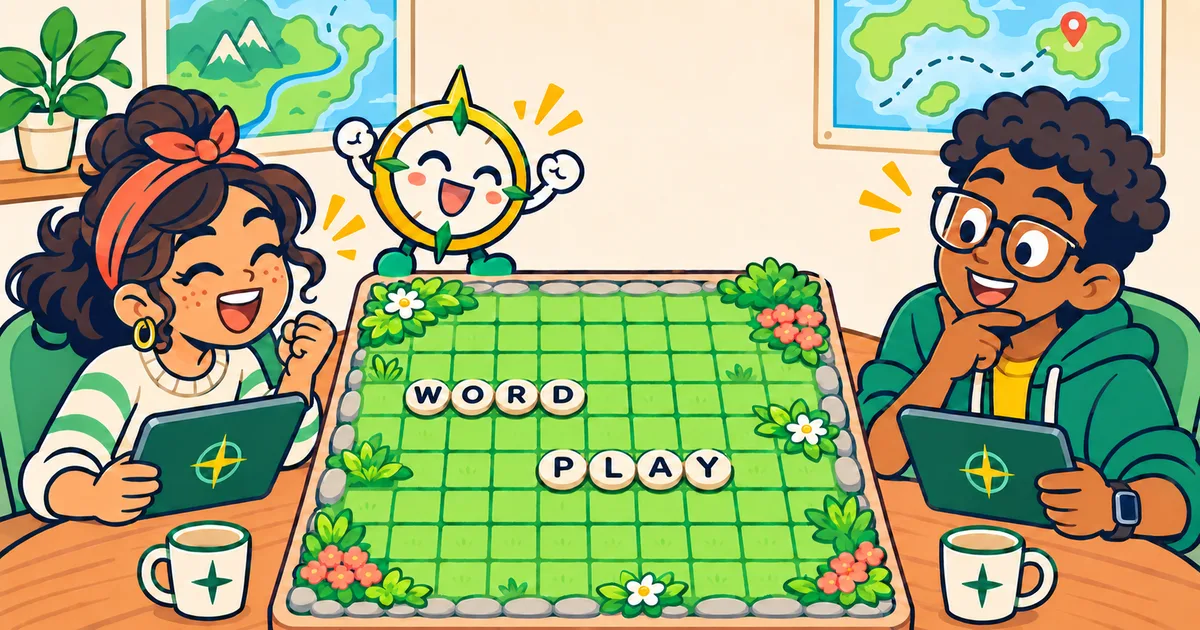
Solo play lets one player work through the bag and compare move choices. Pass-and-play hides the next rack behind a handoff screen. After a match, use the move log to compare premium use, exchanges, scoreless turns, and letters left on each rack. This is an independent implementation with an original premium layout and finite word bank, not an official board, dictionary, rating, or online service. For two-player review, record where each player exchanged, passed, used a premium, or kept costly tiles until the finish. Scores remain tied to Wordmap's original premium layout and finite word bank. They are not interchangeable with official scores, ratings, tournament rulings, or dictionaries.